If you need something bright to look forward to during the winter months, beautiful seasonal blooms are just a few weeks away. Even though many of our trees are currently barren and dormant, some are about to erupt with color and fruit for our wildlife!
Native trees provide nearly year-round blooms. These tree species have seasonal sequencing when it comes to their blooming and fruiting. Depending on temperatures, some trees start to bloom as early as the beginning of February while others wait until the end of spring and summer to bloom and body. This gives our wildlife and pollinators several warmer months to thrive and prepare for colder temperatures.
Explore some of the upcoming common blooms that are seen around our community below. You might even have some of these trees in your own backyard!
Common Natives in Bloom
Eastern Redbud
The Eastern redbud is one of the first trees in our area that shows signs of spring’s arrival. The redbud is very responsive to the increasing hours of daylight and warming temperatures, which triggers an early bloom.
Starting in February, the Eastern redbud begins to show off its vibrant pink flowers! These trees are covered with buds and create a striking display of color. Even the young trees boast colorful flowers, and every year as they age, the redbuds grow in size and bud quantity. After their beautiful spring bloom, they showcase a dense bright green foliage until the fall.
The Eastern redbud is loved by our pollinators because of its early explosion of color. Bees, butterflies, and moths feed on nectar from the flowers while birds and small mammals feed on seed pods that drop from the tree.
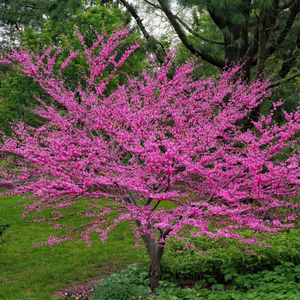 Flowering Eastern Redbud
Source: Buchanan’s Native Plants
White Flowering Dogwood
The white flowering dogwood is another Texas native tree that is known for its outstanding blooms throughout the year. This tree follows seasonal changes that provide spectacular colors in both spring and fall.
Starting in early spring, the dogwood features bracts, which are like flower clusters that are bright white. As the season shifts, the tree develops a red fruit that is loved by our native wildlife including birds, deer and squirrels. Finally, in the fall, the tree leaves turn into a reddish maroon, providing fall foliage.
 Bloomed White Flowering Dogwood
Source: New Blooms Nursery
 White Flowering Dogwood bracts
Source: Darby Creek Trading
Black Cherry
Black cherry trees are a valuable native tree in our ecosystem. Unlike the Eastern redbud and the white flowering dogwood, in the spring, leaves on this tree come out first and are followed by blooming white fragrant flower clusters. These flowers tend to bloom in mid-spring and then turn into edible black cherries!
These black cherries are sought after by more than 33 different bird species and help support deer populations. While the cherries can also be consumed by people, they must be harvested and prepared properly to be safe to eat.
The black cherry tree is also a larval host for so many of our local pollinators, including the Eastern tiger swallowtail! Cherry gall azure and the Columbia silk moth are also supported by this plant.
 Black cherry tree berries
Source: Nativ Nurseries
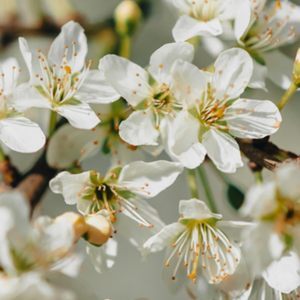 Black Cherry Blooms
Want these in your yard?
These native trees are both beautiful and a vital part of our ecosystem. It is important that we plant native plants to support our pollinators and wildlife, reduce soil erosion and runoff, and promote clean waterways.
If you are interested in getting more native trees in your landscape, join us at our annual Arbor Day Tree Giveaway, held the last Saturday of January each year, to receive free native tree seedlings to plant in your own yard!
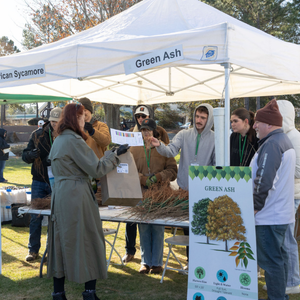 Woman receiving green ash tree seedlings at the 2026 Arbor Day Tree Giveaway