Photo source: Mt. Cuba Center
With showy magenta blossoms, western ironweed is a pollinator magnet in the home garden. A member of the sunflower family, this upright perennial is a frequently overlooked Texas native plant. Open woodlands, prairies, and disturbed areas provide the native habitat for this important pollinator plant. This highly drought-tolerant plant thrives in full sun to part shade and in clay, loam, or rocky soil. Due to the low water requirements of western ironweed, avoid planting it in moist soil or a consistently wet area of the garden.
The low maintenance requirements of western ironweed make it an easy plant to grow in our local climate. Its robust growth provides the opportunity for the plant to spread from rhizomes, which are specialized horizontal parts of the stem beneath the soil. If your plant spreads beyond your desired planting area, it can be divided in spring or managed by deadheading while in bloom to prevent self-seeding. There are no serious insect or disease issues with this tough plant.
Western Ironweed
Source: Current River Conservation Area (Missouri)
Adding western ironweed to a pollinator garden will attract many unique pollinators. The bloom time of late summer to fall causes western ironweed to be a highly important late-season nectar source for butterflies, moths, hummingbirds and the ironweed specialist bee. This ground-dwelling bee requires white pollen to feed its larvae, and western ironweed is one of the few sources of it in our area.
Native bee on ironwood blooms
Source: Mt. Cuba Center
Ironweed is one of the numerous host plants for the painted lady and the American lady butterfly as well as the partheniece tiger moth. Adding western ironweed to the landscape will attract these beautiful insects to your pollinator garden.
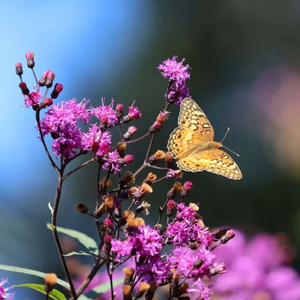 Butterfly flying away from an ironweed plant
Source: Mt. Cuba Center
Painted lady butterfly on a plant
Source: Popular Mechanics
The seeds of western ironweed are extremely valuable to small birds. Attract goldfinches to your property by adding ironweed.
While western ironweed is an important plant for wildlife, it will also add colorful focal points to the home landscape. When mature, this plant reaches three to five feet in height and spreads to between one and two feet wide. The spectacular magenta blooms are especially appropriate as the background for a planting bed, as part of a cottage or native plant garden or in a pocket prairie.
Western ironweed plant
Source: Missouri Wildflowers Nursery
Sources for western ironwood can be found through online research and by visiting local nurseries specializing in native plants. Check the schedules of the Texas Native Plant Society chapters, Master Gardeners, arboretums, nature centers and other local non-profit organizations which focus on nature and the environment to find a local plant sale with this native plant. Fall is the perfect planting time for this important plant. Make plans now to add western ironweed to your own landscape!
For more information, contact the Environmental Services Department at enviro@thewoodlandstownship-tx.gov or 281-210-3800.