Spring is here, and so are the vines! It is important to know which vines are native and support our ecosystem and which ones could be invasive and cause harm. Follow along to learn more about invasive vines species and the proper removal methods to help your community today!
Invasive Vines
Air Potato (Dioscorea bulbifera)
Air potato vine is a common invasive in this region that originated in Asia and spread to the United States from Africa. This is a high climbing herbaceous vine that grows very quickly and is notorious for outcompeting native shrubs and trees.
Proper identification for this vine is very important because it has a native lookalike! The invasive air potato vine has distinct heart shaped leaves, dangling potato-like tubers under the leaves and underground, and small inconspicuous white flowers. This vine can reach up to 65 feet tall. The air potato vine’s lookalike is the native wild yam (Dioscorea villosa). The wild yam also has heart shaped leaves, but it does not produce any of the potato-like tubers. This vine is much smaller than the air potato vine and can only reach about 15 feet tall.
 Potato-like tubers of the air potato vines
Source: Visit St. Augustine
 Heart shaped leaves of the air potato vine
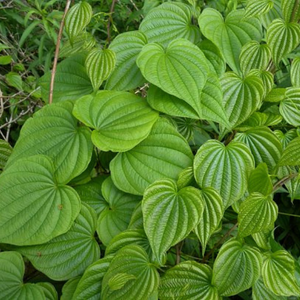 Leave of the native lookalike, the wild yam
Source: Illinois Wildflowers
The tubers are the primary means of the spread of the air potato vine. As they grow and drop to the ground, they sprout a new stem. This can quickly multiply the number of vines and damage it can cause in a given area as they outcompete native plants.
Japanese Climbing Fern (Lygodium japonicum)
Japanese climbing fern is a perennial viney fern that is native to Asia and spread to the United States from Japan. This vine can be identified by its lacy and delicate leaves with a triangular fern-shaped offshoot. These leaves are connected by strong and tangled brownish wiry vines. Japanese climbing fern is usually seen along forested roadsides, stream embankments, and open forest.
 Japanese climbing fern vines in a forest
Source: Louisiana Native Plant Society
This vine is known for its climbing and twining within shrubs and tree canopies, creating dense mats that smother plants underneath it. These mats create a thick ground cover that prevents native seed germination and can act as an accelerant during a wildfire or prescribed burn. On the underside of the fern leaf, there are tiny spores that will reproduce the vine as those spores are shaken off and spread, allowing this to easily spread.
Kudzu (Pueraria montana VAR. lobata)
Kudzu is a ropelike woody vine that originated in Asia and was introduced to the United States in 1876. This vine can be identified by its thick woody vine, dark green three-lobed leaves, and little hairs covering the leaves and stem called trichomes.
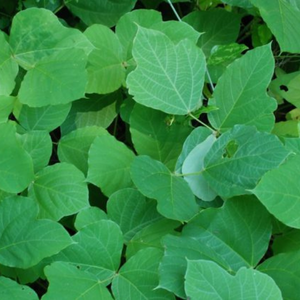 Close-up photo of kudzu leaves
Source: Alabama A&M University
Kudzu grows at an astounding rate of up to one foot per day! Due to the fast growth rate, kudzu will smother plants that it is on top of, which causes tree mortality and prevents native plants from growing through the vines.
Removing the Invasive Vines
Vine removal is a critical aspect of stopping the spread of invasive species in the community that reduces the ecological, economic, and human harm occurring to the region.
To remove the vines, it is recommended to start with cutting and pulling down the vines and removing any roots from the soil. After removing, put the vine trimmings and tubers into trash bags and throw away the bags. This method – even though it is time consuming – is very effective. Removing the vines and tubers from the affected area reduces the vine’s ability to spread in the future. This process will likely need to be done a few times before the removal site is clear of the invasive vines, but you will see less regrowth every time.
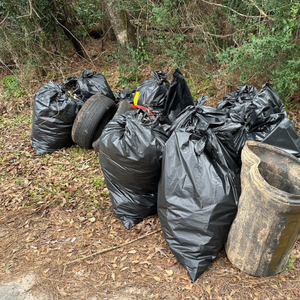 Invasive vines placed in black trash bags to stop the spread after removal
Remove and Replace
After removing the invasives from your yard and green spaces, it's crucial to fill this space with a native plant. Many invasive plants are opportunistic spreaders, so if they have an open space, they will try to fill it. If you refill the space with a native plant, you remove that open space for the invasive to reinfect and repopulate. Between removal and replanting with native plant species, you reduce the harm of the invasives, increase pollinator habitat, and create a space that is more difficult for the invasives to return to.
Let’s Stop the Spread!
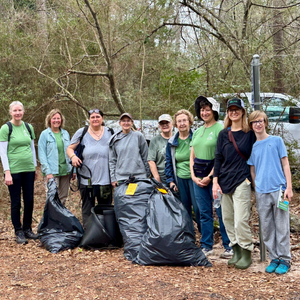 The Invasives Task Force after invasives removal in The Woodlands
If you are interested in helping reduce the spread of invasive plants in the community, consider joining the Invasives Task Force! The Invasives Task Force is a volunteer group that removes invasive plants from green spaces within The Woodlands Township.
For more information on the Invasives Task Force, visit our volunteer page.
For More Information About Invasive Vines