Photo source: U.S. Fish and Wildlife Service
Liatris punctata
Native to all lower 48 states in our country and once blooming by the thousands across our prairies, many varieties of Liatris have nourished pollinators and humans alike. Native Americans baked and ate the carrot-flavored taproot of this beautiful flowering plant, and various plant parts were used as medicines.
Source: Birds and Blooms
This perennial Texas native plant is also the signature flower of the tallgrass prairie. Today, Liatris punctata, commonly known as Texas gayfeather or dotted blazing star, can be found blooming in 19 states. Its current native habitat includes prairies, mesquite grassland, roadsides, fencerows, open fields and woods.
Showy tufted magenta to purple-pink flowers are displayed on a two-to-three-foot tall stem. Bloom time for Texas gayfeather is late summer to December. Because of its late bloom time, it is a crucial nectar plant for nourishing migrating monarchs during the fall migration.
A member of the Asteraceae (sunflower) family, Texas gayfeather develops a deep root system which makes it both drought and heat tolerant. However, the large taproot also makes it challenging to transplant. This plant prefers full sun and well-drained, sandy soil. It is a wonderful low-water-use plant that favors dry soil. In fact, too much water will cause the large taproot to rot. Texas gayfeather can be grown from seeds or roots; if grown from seed, it does not flower until the second flowering season. In early spring, the plant should be cut back to about two inches above the ground to encourage more blooms.
In winter, the colorful flowers of Texas gayfeather produce edible seeds that are a favorite of native wildlife, including many birds. It is a mainstay food for migrating flocks of birds.
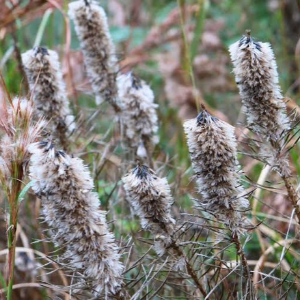
Source: Ladybird Johnson Wildflower Center
In the home landscape, this beautiful plant can be used in perennial gardens, on rocky hillsides, and in rock or low-water gardens.
Texas gayfeather is a major nectar magnet for monarchs, swallowtails, fritillaries, and painted lady butterflies. Many native bees also use this plant’s nectar, including bumblebees, leafcutter bees, and sweat bees. Clearwing hummingbird moths and various hummingbirds are frequent visitors to these beautiful purple plants.
Source: U.S. Forest Service
According to the Xerxes Society, Liatris is the only larval host plant genus for some specialized flower moths: the liatris flower moth and the glorious flower moth. It is also the only host plant genus for the blazing star borer moth. The larvae of this moth do not eat the leaves but rather bore into the stem, eating the inner part of the plant’s stalk.
Source: iNaturalist, Matt Keene
These adult moths are camouflaged when nectaring on Texas gayfeather since their rosy-pink color matches the pink and purple flowers. This helps the moths hide from predators.
Texas gayfeather seeds may be purchased from online native seed growers and may also be available at native plant or Master Gardener sales. Now is the perfect planting time for these seeds while the weather is still warm. Planting in the fall assists with seed germination and root establishment before colder weather arrives. Since Texas gayfeather is a perennial, once established in the home garden, it will provide stunning color and attract pollinators for years to come.
For more information, contact the Environmental Services Department at enviro@thewoodlandstownship-tx.gov or 281-210-3800.