Have you ever noticed a blue-green seal on a storm drain that reads, “No Dumping – Drains to Waterways”? You may have walked past one on your street, near a park, or along a trail without giving it much thought. These small markers play a significant role in protecting the creeks and streams that flow through The Woodlands.

Drain marker with two fish in the middle that reads, “No dumping, drains to waterways” around the edges
Storm drains are designed to collect rainwater from streets and sidewalks and carry it into nearby waterways. Unlike water from sinks or toilets, stormwater does not go to a treatment plant. Instead, anything that enters a storm drain flows directly to our creeks, lakes, and – eventually – larger rivers.
That’s where Storm Drain Marking comes in.
What is Storm Drain Marking?
Storm Drain Marking is a volunteer-based program that raises awareness about water pollution and encourages responsible behavior. Volunteers place blue-green markers on storm drains to remind residents that dumping oil, chemicals, litter, or yard waste into the street can harm local waterways. By increasing visibility and education, the program helps prevent pollution before it starts.
Why It Matters for The Woodlands
The Woodlands is part of the Spring Creek watershed, a large drainage area that collects rainfall and runoff from neighborhoods, roads, and businesses. Everything that washes into storm drains here eventually makes its way to Spring Creek and connected waterways.
Stormwater runoff from urban areas is one of the leading sources of water pollution, according to the Environmental Protection Agency’s National Water Quality Inventory. Common pollutants include:
These pollutants can lower water quality, harm aquatic life, and impact recreation opportunities like fishing and kayaking. Storm Drain Marking helps reduce these risks by reminding residents to keep pollutants out of the system in the first place.
How You Can Help: Complete a Storm Drain Survey
Right now, we are transitioning our Storm Drain Marking Program from paper maps to an updated online mapping system. Because of gaps in our records, we are asking residents to help visually confirm which neighborhoods have marked storm drains.
Surveying is simple and flexible. You can walk, bike, or drive through a neighborhood to check whether at least five storm drains display the blue-green marker.
Here’s how to get started:
Step 1: Choose a Neighborhood
Use the Interactive Storm Drain Marking Map to select one or more neighborhoods shaded in gray. Gray areas still need surveying. Neighborhoods shaded in green, yellow, or red have already been surveyed.
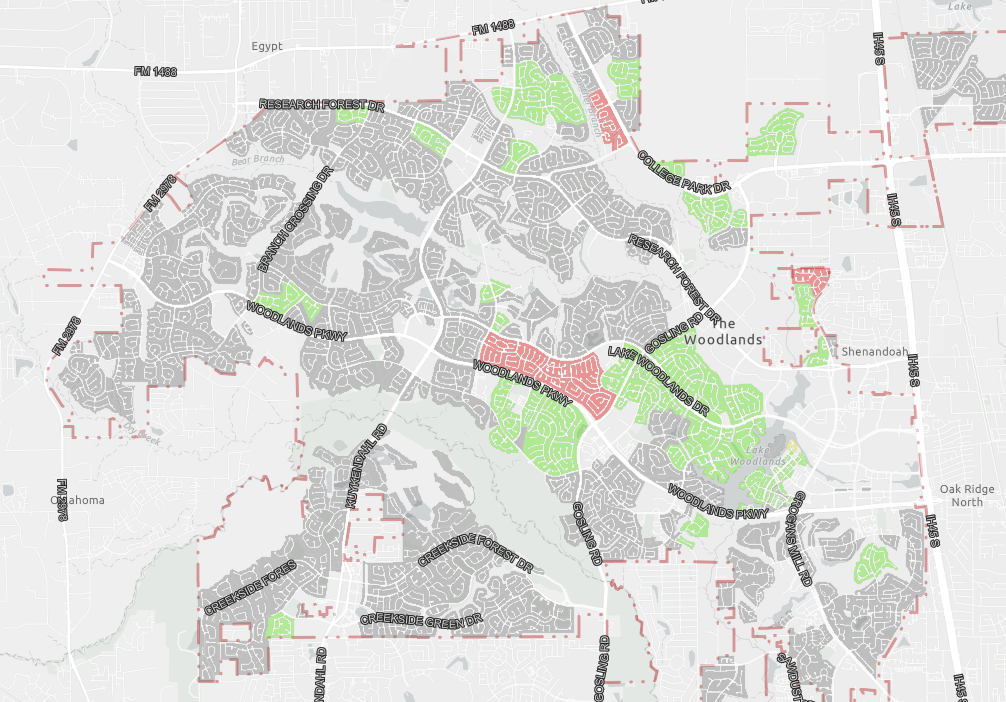
Map of The Woodlands Township with various areas highlighted in green, red, or grey
Step 2: Look for Markers
Visit the neighborhood and check storm drains. Your goal is to verify whether at least five drains are marked with the blue-green “No Dumping – Drains to Waterways” seal.
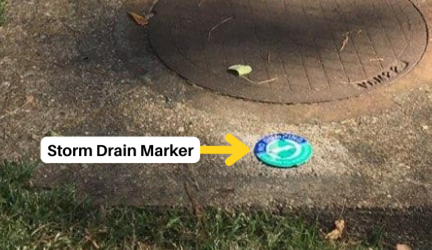
Storm drain marker affixed to concrete in front of a drain. Label states, “storm drain marker” and points with an arrow at the marker
Step 3: Submit Your Findings
After completing your survey, report your results online. Be sure to record the ID number and subdivision name listed on the Interactive Map so we can accurately update our records.
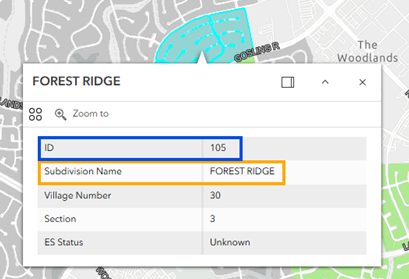
Pop-up window that displays the subdivision name and other identification labels
That’s it. In as little as 30 minutes, you can help protect water quality across the Spring Creek watershed. Families, scout groups, neighborhood associations, and individuals can all take part.
Every verified neighborhood moves us one step closer to a fully documented and protected storm drain system.

Volunteer squatting in front of a storm drain with a marker affixed to it and supplies surrounding him
Storm Drain Marking may seem simple, but its impact reaches far beyond a single street. Every marked drain represents a reminder to protect water, wildlife, and our community.
If you’re looking for an easy way to support clean water in The Woodlands, storm drain surveying is a great place to start.
For more information, contact the Environmental Services Department at enviro@thewoodlandstownship-tx.gov or 281-210-3800.