If you've ever found yourself standing in the repellent aisle, overwhelmed by choices and confused about which one really works, you're not alone. Let's explore the four EPA-approved main ingredients in mosquito repellents, empowering you to find the perfect match that suits your needs.
 Four bottles of insect repellent in a row on an outdoor picnic table
The Fantastic Four: Unveiling the Main Ingredients
Let's meet the four stars of our story – the EPA-approved main ingredients found in mosquito repellents:
1. DEET (N, N-diethyl-meta-toluamide): DEET is the classic heavyweight champion, known for its long-lasting effectiveness against mosquitoes and other pesky biters such as ticks and horseflies. Deep-Woods Off is a favorite of adventurers, hunters and hikers that find themselves in thick brush or areas prone to flooding. Save your money though – researchers have found no added benefit for products with more than 50% DEET. Many of the new “active” or “sport” formulations have more appealing scents and lack the sticky feeling of higher-percentage products.
2. Picaridin (Icaridin): The versatile star in the repellent world, Picaridin provides a reliable alternative to DEET, offering similar protection without a strong scent. Though newer to the market than DEET, Picaridin has been shown to provide effective protection like its predecessor.
3. Oil of Lemon Eucalyptus (OLE): A natural contender derived from the lemon eucalyptus tree, this option provides a plant-based alternative that comes in a standardized formula. OLE smells exactly like it sounds – a mix of eucalyptus and lemon. Keep in mind, it is not suitable for kids under three years.
4. IR3535 (Ethyl Butylacetylaminopropionate): The underdog of the group and a mouthful to pronounce, IR3535 offers effective protection while being virtually scentless. It dries without being sticky, making it a popular choice for families.
DEET
% Ingredient: 10 to 30%
Fights Against: Mosquitoes and Ticks
Age Restrictions: > 2 months
Derived From: Synthetic repellent invented by the US Army for use by military personnel in insect-infested areas
Also Listed As: N, N-diethyl-meta-toluamide
Additional Information: NPIC Fact Sheet
Picaridin
% Ingredient: 15 to 20%
Fights Against: Mosquitoes
Age Restrictions: > 2 months
Derived From: Synthetic version of piperine, found in group of plants that produce black peppercorns
Also Listed As: Icaridin, KBR 3023
Additional Information: NPIC Fact Sheet
Oil of Lemon Eucalyptus
% Ingredient: 30 to 40%
Fights Against: Mosquitos
Age Restrictions: > 3 years
Derived From: Derived from lemon eucalyptus tree branches and leaves or a synthetic version of the same (PMD)
Also Listed As: Para-methane-diol or PMD
Additional Information: NPIC Fact Sheet
IR3535
% Ingredient: 15 to 20%
Fights Against: Mosquitos and Ticks
Age Restrictions: > 2 months
Derived From: Structurally similar to the natural substance β-alanine – a component of pantothenic acid (vitamin B5)
Also Listed As: ethyl N-acetyl-N-butyl-ß-alaninate
Additional Information: NPIC Fact Sheet
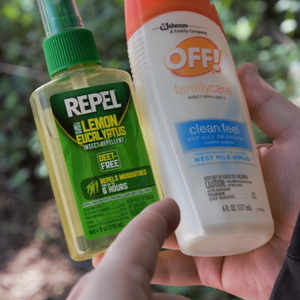 Hands holding two different bottles of insect repellent
The Power of Choice: Why Try Them All?
Now, you might be wondering, "Why bother trying all these different ingredients?" The only effective repellent is the one you actually wear, so finding something that works and keeping it close are key to preventing mosquito bites.
1. Personal Forcefield: Everyone smells a little different to those pesky biters, so it’s important to find the one that masks your personal chemistry. This is also the reason why the repellent that works best for you may not be as effective for your partner or kids.
2. Tailored Protection: Different environments call for different levels of protection. By trying all four EPA-approved ingredients, you can tailor your defense based on the activity, duration, and mosquito prevalence in your specific surroundings. Mix and match repellents based on your activities - maybe DEET for that long hike in the woods, Picaridin for an evening stroll, and Oil of Lemon Eucalyptus for a weekend picnic. Every repellent will list how long it is expected to be effective before you need to re-apply.
3. Not Just a Spray Anymore: Even with long sleeves and pants, mosquitoes are persistent and known to find any sliver of exposed skin. Repellents come in a variety of formats, such as lotions and wipes, that allow for easy application behind the ears, on backs of hands, and ankles. Given their ease of application, wipes and lotion are often easier little ones and a simple addition to the diaper bag or beach tote.
4. Speaking of Little Ones: Check out this guide from the California Department of Public Health for guidance to parents and care givers on choosing the best insect repellent for children and how best to safely apply them. For babies under two months, opt instead for netting to cover the stroller when out and about.
The journey to finding your mosquito repellent match is full of choices where you can tailor your defense to fit your unique preferences and needs. Embrace the power of choice, try them all, and step into a mosquito-free world that revolves around you. The repellent aisle is your playground – go ahead and conquer it!
For more information, contact the Environmental Services Department at enviro@thewoodlandstownship-tx.gov or 281-210-3800.